
Transportation Go! makes moves in Chicago
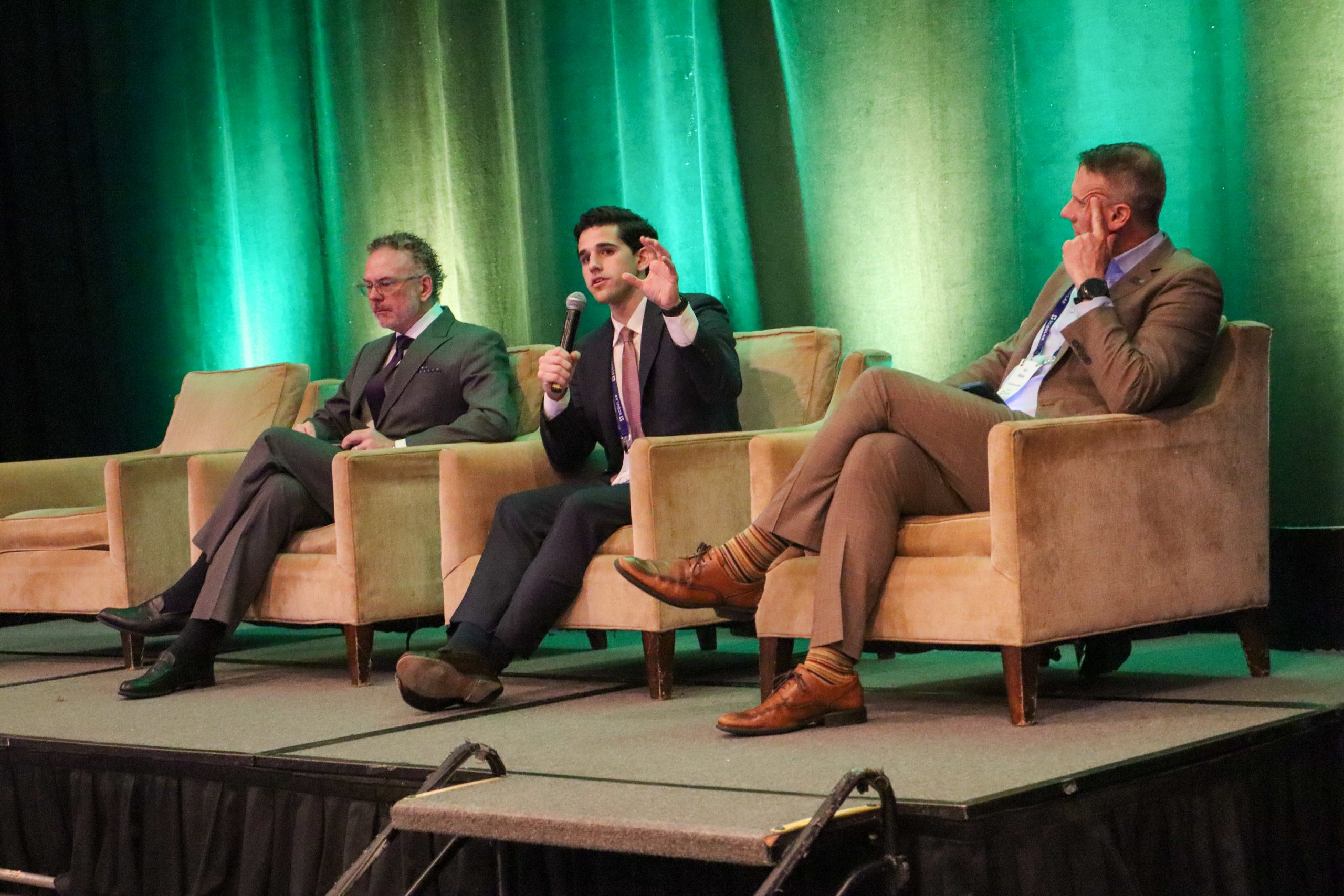
The transportation industry, much like agriculture, is one rooted in resiliency and a shared belief that no obstacle is too great or complex to overcome – so long as all parties along the supply chain put their collective heads down, collaborate and think outside the box.
“There’s no bump in the road that we can’t see and get over together,” said Gene Seroka, executive director of the Port of Los Angeles. “That really is the promise of what we have as a supply chain community. We lean on each other to get through when times are tough and figure out how to do things better. … and ‘resilience’ does speak to what we all feel today.”
Over 120 luminaries from across the expansive global transportation industry connected with U.S. farmer leaders and identity preserved agriculture stakeholders at the fifth-annual Transportation Go! conference, which brought a record attendance to Chicago.
“Transportation Go! is the place to be to have those frank discussions on how to improve our global system of bringing our goods to the marketplace,” said Illinois farmer Bryan Severs, chair of the United States Identity Preserved Alliance (USIP Alliance), which once again served as host of Transportation Go! “By addressing these challenges, we’re fostering insights and helping agriculture move across the nation and world.”
Tariffs and lingering economic and geopolitical strife uncertainty, along with the proposed Union Pacific and Norfolk Southern merger, served as conversation catalysts. However, the more than 30 speakers representing a who’s who of rail, trucking, river and export logistics throughout the two-day conference signaled a hopeful, if cautiously optimistic, message that the United States’ $7 trillion trade industry continues moving forward undaunted despite rough patches, roadblocks and turbulence.
“The key word for me throughout this year’s conference was ‘commonality,’” said Gary Williams, USIP Alliance director of transportation & regulatory affairs and conference moderator. “Every mode of transportation has a part to play. There are a lot of needs and opportunities before us and, with all the issues about what’s not happening, we continue to see why exports are something that are necessary in the future while ensuring the transportation and infrastructure are kept viable. That investment also leads to effective systems, which we heard throughout this year’s Transportation Go! That gets me pretty charged up.”
Seroka set the positive tone with his opening address: An overview of the Port of Los Angeles and its cargo that reaches all 50 states and each of America’s 435 congressional districts. One in nine southern Californians depend on the port for employment – including truck drivers, warehouses and port workers; manufacturers; technology and logistics firms; and, of course, farmers and ranchers.
“Our discussions of supply chain and imports and exports are truly a conversation of national significance,” he said. “A lot of folks think this business is important, and business is booming.”
More than $400 billion a year of product – over $1 billion per day – moves through the LA Seaport, which is supported by over 200,000 import and export companies.
“It’s a really big deal for the companies who have to facilitate all that cargo,” said Seroka, who was joined on the U.S. West Coast Panel by Jeff Bellerud of the Northwest Seaport Alliance. “To say there’s a lot of conversation going around would be an understatement … and from an optimistic side, I’m optimistic about the United States of America. Even with all our bumps, our economy will continue to grow.”
Seroka also addressed the numerous farmers in the audience, spanning Minnesota, South Dakota, Illinois, Indiana and Wisconsin.
“It is our duty to support the farmers and grow the export market,” he said.
Day 1 panels also included extensive deep dives on road transportation and the importance of ag exports; an appearance from Anthony Fisher of the U.S. Maritime Administration; digital freight; intermodal transportation; transloading; and more.
“We need to secure some semblance of control over our supply chains,” Fisher said, adding, “Our end goal is to make your products cheaper overseas.”
During the Road Transportation Panel, panelists highlighted the importance of exports to the U.S. farm economy. Soybeans, for example, are the nation’s top ag export, a market valued at nearly $30 billion yearly. Top trading partners for U.S. soy include China, Southeast Asia, Mexico and Canada.
“Here in Illinois, transportation is our competitive advantage,” said Todd Main, director of market development with the Illinois Soybean Association. “What makes us the best in the world is we can get our product where it needs to go, when it needs to go, on a continuous basis, and that’s a big plus for us.”
With U.S. soy production expected to increase by over 60% over the next 25 years, U.S. farmers continue to take the long view, which means finding new markets domestically and internationally, including Sub-Saharan Africa and Southeast Asia. To achieve those goals, Main said farmers must rely on a resilient, diverse transportation system.
“Farmers think about things not only in seasons, but in terms of legacy,” Main said. “How do we meet that demand to get our soybeans out our state and into the world?” 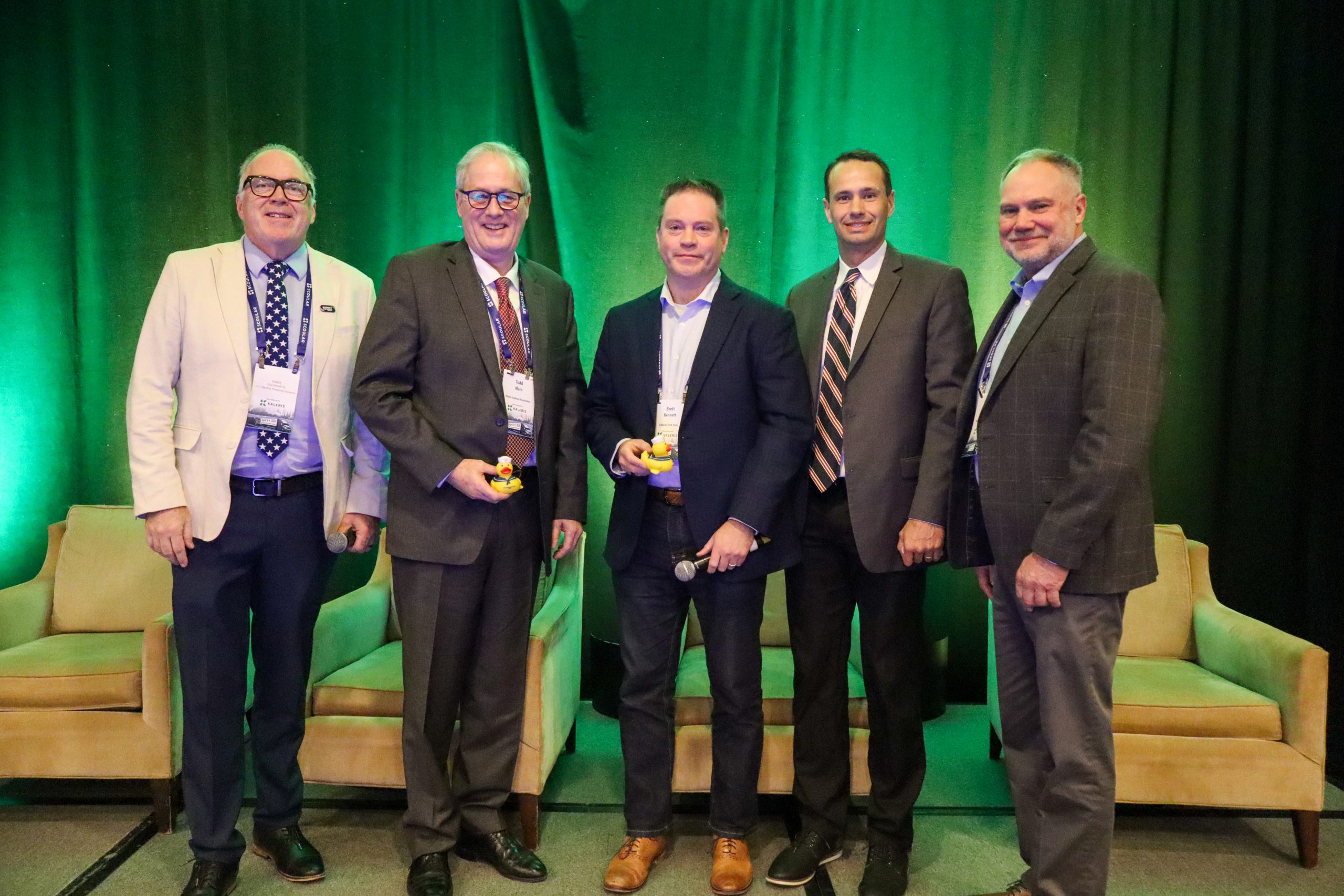
Ship shape
Day 2 began with a panel on the Great Lakes St. Lawrence Seaway System, which stretches over 2,300 miles from Lake Superior to the Gulf of St. Lawrence. By itself, the Great Lakes region is the world’s third largest economy, with an annual economic output of nearly $5 trillion – thanks to a reliable, 15-lock waterway that’s open nearly 300 days per year. Yet only about 3% of U.S. grain moved through the Great Lakes St. Lawrence Seaway System.
“We have room to grow,” said Ken Carey said, general manager of cargo and real estate for the St. Lawrence Seaway Management Corporation. “We want to grow the grain; we need to get more ag out of the system. We have the carriers and the system to do it.”
Mike McCoshen, administrator of the Great Lakes St. Lawrence Seaway Development Corporation, said his attendance provided an opportunity to engage with stakeholders.
“That’s why I’m at Transportation Go!” he said. “To learn from all of you.”
Max Vekich of the Federal Maritime Commission, served as the featured speaker of Day 2, and spoke of how lack of infrastructure upkeep is preventing greater use of U.S. ports, specifically citing the Pacific Northwest and Port of Duluth.
“Let’s be sure to utilize all of our facilities,” he said. “We could be doing a better job of pushing cargo through those (ports).”
To cap the day, attendees heard from Jonathan Gold of the National Retail Federation, who underscored how tariffs, and their shifting percentages, have thrown retailers for a loop over the past 14 months. Yet, with consumer demand still high, he’s also bullish.
“Imports and exports drive each other,” he said, “and ag is the leading export market for what we do.”
Sponsors included the Illinois Soybean Association, Illinois Department of Agriculture, Great Lakes St. Lawrence Seaway Development Corporation, South Dakota Soybean Research and Promotion Council, Wisconsin Soybean Marketing Board, Minnesota Soybean Research & Promotion Council, Ports of Indiana, North Dakota Soybean Council, CPKC, Calhoun Truck Lines, Kaleris, Indiana Soybean Alliance, Union Pacific, Profinium, Tri-Cities Intermodal, Friederichs Seed, Scoular, Port Milwaukee, Pasha Logistics, Grain Millers, Northwest Seaport Alliance and Duluth Cargo Connect.
“I appreciate that our speakers came in with a mindset of looking beyond ‘Here’s what I’m having issues with’ and instead exploring opportunities,” Williams said. “The optimism I’m coming away with really is going to fuel us at U.S. Identity Preserved Alliance for 2027 and the solutions that we’re going to be focused on.”
To kick off the conference, the Illinois Soybean Association hosted a tour of the Chicago River on the First Lady, which is powered by B20 (20% soy-based biodiesel).
“As a farmer, we see how we take our product to our buyers, and our buyer has this gigantic network that we as farmers don’t even think about,” Severs said. “It was very rewarding to showcase Illinois as a hub and listen to all the different intermingling of how transportation gets our products moving and the struggles my buyers have getting it across the pond. It’s beneficial to my family if we can figure out who the end user is and help move that along the way through the IP process.”
The 2027 Transportation Go! is expected to take place for the first time in Washington, D.C. More details will be announced in the coming weeks. To stay up to date, visit transportationgo.com.
“There were so many great speakers at this year’s conference with lots of dialogue and networking across our industry,” said Randy Duckworth, USIP Alliance executive director.
